
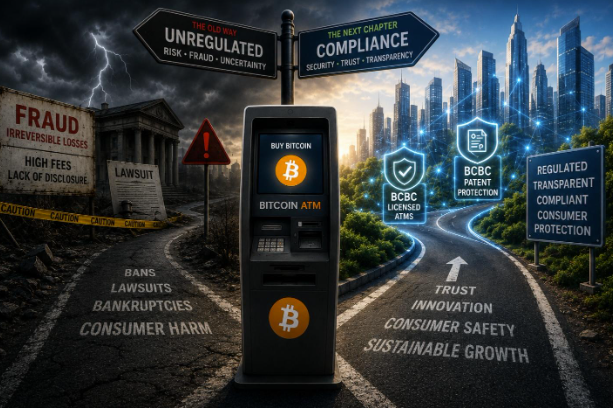
A Market Intelligence Review of the Shifting Landscape for Physical Crypto Kiosks in 2026
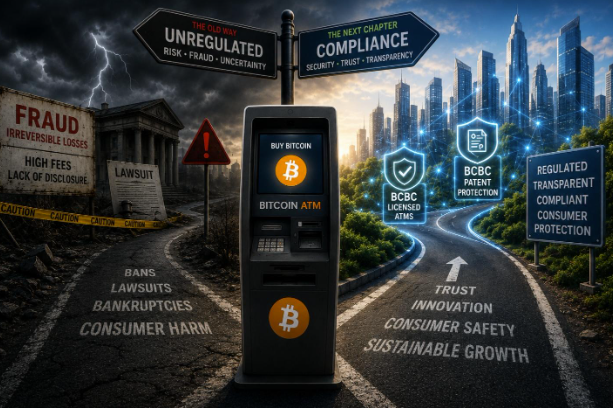
The Bitcoin ATM industry, once a powerful symbol of cryptocurrency’s promise to connect digital assets with everyday finance, is at a pivotal turning point. Recent months have brought intense regulatory actions, legal challenges, high-profile bankruptcies, and a sharp focus on consumer protection. As we reach mid-2026, the sector is evolving rapidly — and the path forward is clear.
There is certainly a lot to unpack.
A Regulatory Reckoning: From Expansion to Contraction
Bitcoin ATMs grew explosively over the past decade, offering cash-to-crypto access across the United States. At their peak, operators like Bitcoin Depot managed networks of over 9,000 machines, with the U.S. accounting for roughly 80% of the world’s ~39,000 crypto ATMs.
That era of unchecked expansion has shifted to intense scrutiny. States including Indiana and Tennessee have enacted outright bans on virtual currency kiosks. Minnesota’s legislature passed a ban and sent it to the governor, while Canada proposed a nationwide ban in its Spring Economic Update 2026. Florida and California have imposed transaction caps and fee limits, and other jurisdictions have suspended licenses or tightened compliance rules. By April 2026, 20 states had introduced new restrictions, according to AARP and ABA Banking Journal reporting.
Regulatory pressure goes beyond laws. Attorneys general in Missouri, Iowa, Massachusetts, and Washington, D.C. have filed lawsuits against major operators, citing inadequate fraud controls, misleading fees, and consumer protection violations. Missouri’s suit against CoinFlip alone seeks $1.8 million in penalties.
Fraud as the Catalyst: The Human Cost of Irreversible Transactions
The driving force behind the crackdown is a surge in fraud. The FBI reported a 58% year-over-year increase in crypto kiosk fraud, with Americans losing approximately $389 million in 2025. Adults aged 50+ accounted for more than half of complaints and over $302 million in losses. AARP data showed adults over 60 made up more than two-thirds of reported victims.
Scammers commonly impersonate law enforcement, government officials, or tech support, pressuring victims to send cash via Bitcoin ATMs for fabricated emergencies. Because transactions are irreversible, funds are almost always lost.
Real-world tragedies include an Idaho retired couple losing $76,000 via Bitcoin Depot machines (leading to a federal class action) and a Las Vegas woman losing $12,500 in one day over a fake jury duty threat. The FTC and FBI estimate over 10,000 victims annually, with median losses around $10,000.
Economic Viability in Question: The End of the “Fast, Loose, and Cash-First” Model
Regulatory pressure, lawsuits, and eroded trust are challenging the old business model. Bitcoin Depot’s May 2026 bankruptcy highlights the shift: the company reported nearly 50% revenue decline and over 85% drop in gross profit year-over-year.
High fees (often exceeding 20%, with some allegations reaching 50%) are under heavy fire. As consumers discover lower-cost, regulated alternatives, the old convenience premium is fading.
The Shift to Regulated and Institutionalized – Crypto Access
Physical kiosks now face restrictions while retail crypto access moves toward regulated platforms. Spot Bitcoin ETFs, mainstream fintech apps, and licensed custodial services deliver greater transparency and lower costs.
This evolution underscores a deeper debate: balancing innovation with real consumer protection. As one analyst noted, the Bitcoin ATM crackdown is ultimately about trust — in infrastructure, fee transparency, and protecting vulnerable users.
Policy, Politics, and the Path Forward
President Trump’s May 2026 executive order, “Restoring Integrity to America’s Financial System,” directs stronger due diligence and scrutiny of unverified accounts. While aimed at reducing illicit activity, critics worry overly restrictive rules could push cash-reliant users toward less regulated channels.
Across all actions, one theme stands out: transparency matters. Clear fee disclosures, consumer education, and proactive fraud prevention are now baseline expectations. The lightly supervised, cash-first era is giving way to compliance-focused, institutionally integrated models.
A Satoshi for Our Thoughts…
The concerns driving regulatory scrutiny are legitimate. Fraud at crypto kiosks has become a serious consumer protection issue — one that policymakers, regulators, and industry leaders must address together.
At the same time, Bitcoin ATMs filled a genuine need: a physical bridge for cash-based users entering the digital asset economy. As crypto integrates further into mainstream finance, the question is no longer whether physical infrastructure has a role, but what form it must take to meet modern standards of security, accessibility, and trust.
The challenges today may accelerate the industry’s evolution toward more secure, transparent, and compliant models. While some legacy approaches struggle to adapt, demand for trusted retail crypto access will remain strong.
At Bitcoin Bancorp ($BCBC), we believe the future belongs to organizations that successfully combine innovation, accessibility, security, and unwavering consumer protection. Licensed, patent-protected, and built for compliance, our network represents the next chapter — one grounded in trust and sustainable growth.
